|
Walking, "The Inca trail"
For
those that have about seven exclusive days for the visit
to Machu Picchu and also are adventure lovers, the walk
through the "Inca trail" is recommended. This route has
become the favorite of many tourists and only last year,
more than 15 thousand people followed these roads to
arrive to
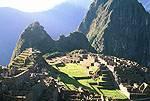
Machu Picchu.
This hiking begins in the 82 kilometer of the
railroad Cusco - Aguas Calientes, in
Ollantaytambo. Leaded by guides and in groups not smaller than 10; you
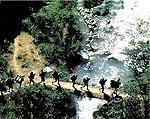
arrive to Machu Picchu after 4 days, after traveling 40 kms. (24.85 miles) by the old Inca stone road, on the
edge of the Urubamba canyon. The road crosses the Inca
ruins of Patallacta, Huallabamba, Runku Rakay,
Sayacmarca, Phuyu Pata Marca and Wiсaywayna. Besides
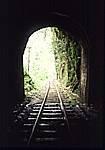
captivating natural landscapes, water falls, tunnels,
abundant flora and fauna, amid the exuberant vegetation
for being near the forest, with view to the snowy
mountains, and with pure air free of any vestige of
contamination; ideal for birdwatching. The service of
mountain guides, includes all the equipment, feeding,
tents, carriers, etc.
Exist routes for hiking of smaller duration; one that
leaves from the 104 km. of the railroad crosses the
ruins of Wiсaywayna and after few hours you arrive to
Machu Picchu.
In all these routes lodgings of "Instituto Nacional
de Cultura" (National Institute of Culture) exist where
you can spend the night, and the roads are signaled, in
spite of it, it is recommended to hire the services of
experienced mountain guides.
By Train
The traditional and
most frequent is by train from
Cusco
to the station of Aguas Calientes. This
service offers the following categories
"Autovagуn" (Main wagon) (US $55): Daily departures
at 6 a.m. and 9 a.m., boarding service, lunches; return
at 3 p.m. and 6:30 p.m. the trip lasts an average of 3
hours and it is direct.
The train has the "Inca car" (US$45), "Pullman"
(US$34) and the "Express" (US $19). Departures Monday to
Saturday, at 6:25 a.m., 8:40 a.m. and 10:15 a.m. Return
to Cusco at 4 p.m., 6 p.m. and 8:15 p.m. The trip
lasts a little more than 3 hours, and it makes stops in
some intermediate towns.
When arriving to Aguas Calientes, small buses can be
taken that ascend the mountain and transport you to the
citadel.
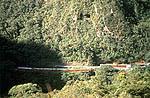
The train line runs parallel to some parts of the
Urubamba River, and the trip itself is a show for the
beautiful landscapes that you observe.
Helicopter
Another option is a
flight in a helicopter from Cusco to Aguas Calientes,
ideal for those who only have little time and a better
budget.
|